Cupboard · What you keep
Cupboard: what to keep so a bad week stays a bad week
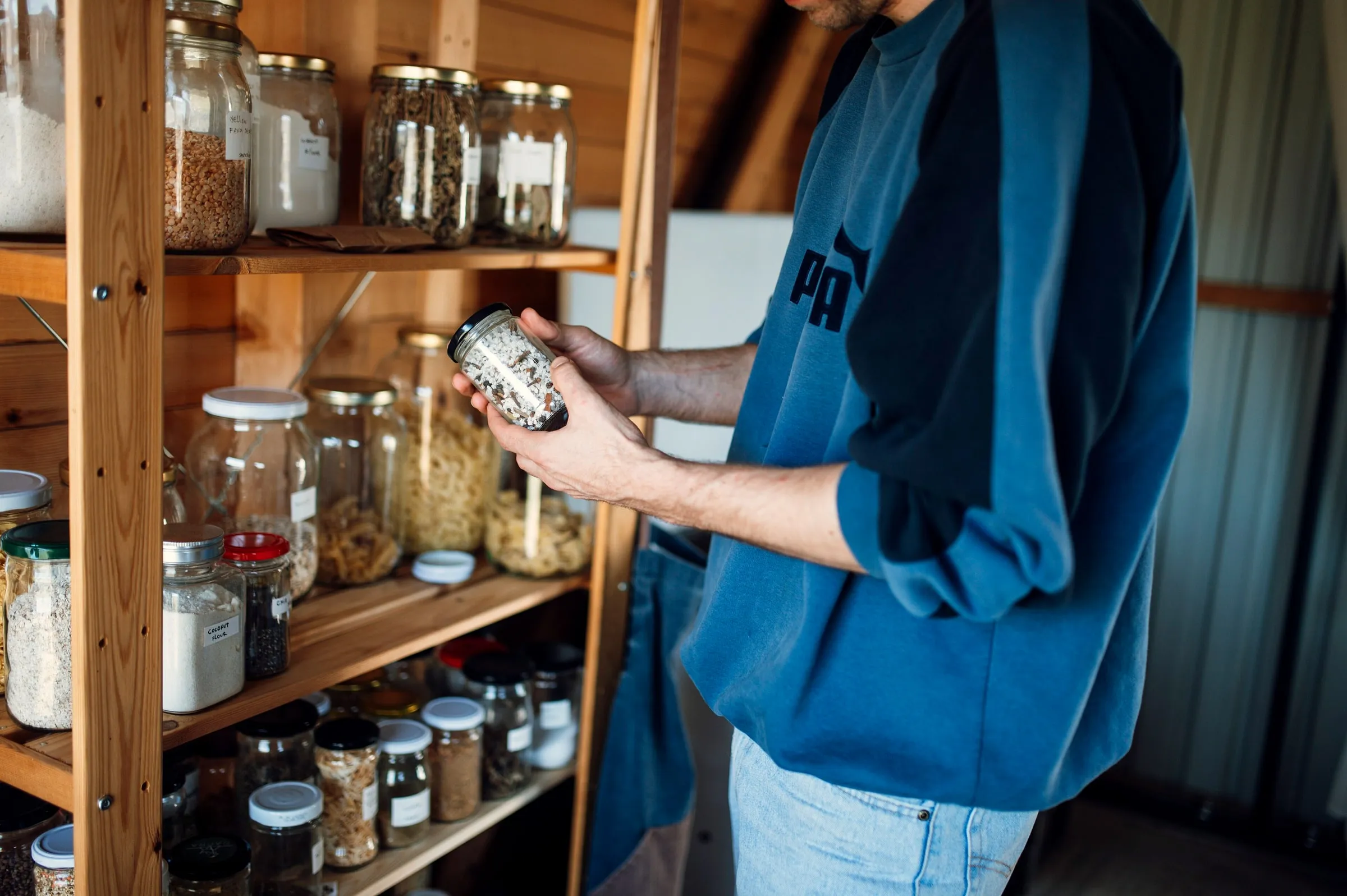
A ready cupboard holds three days of basics: drinking water at 2.5 to 3 litres per person per day (GOV.UK Prepare), tinned food you can eat cold with a tin opener, a torch and radio with spare batteries, a charged power bank, and your regular medicines. Most households already own half of it.
Why a cupboard is enough
Most disruption in Britain is ordinary. The power goes off for an evening, a burst main leaves the taps dry, a storm keeps everyone at home for a day. The government’s own Prepare campaign asks every household to keep water, tinned food, a torch, a radio and a power bank — not because anything dramatic is coming, but because these are the things that turn a bad day into a mild inconvenience.
Plenty of the country is partway there. LINK’s Cash Index found 49% of UK adults keep a battery-powered torch and 47% keep tinned goods (LINK Cash Index, published May 2026). The gap is rarely money; it’s just that nobody has put the things in one place and checked the batteries.
Where to start
Start with the UK home emergency kit — three tiers, from a £60 supermarket trip to a full ready home. If you only do one thing today, buy 9 litres of bottled water per person and put it under the stairs. That’s three days at the survival minimum, for less than a coffee each.
Then work down the guides below in order. Each one tells you the standard it meets, what it costs, and when we last checked the facts.
The cupboard rules
- One place, everyone knows it. A box or bag in a cupboard beats supplies scattered round the house.
- Only keep food you’d actually eat. Rotate it at the clocks change, twice a year.
- The torch lives near the door, so you can find it in the dark.
- Check dates twice a year — when the clocks change in March and October.
Changelog
- 26 August 2026 — page created; launch set of cupboard guides published.
Guides
The UK home emergency kit: what to keep, from £60 to £600
A calm, sourced guide to building a home emergency kit UK households actually need: water, tins, torch, radio, cash and more, in three budgets from £60 to £600.
CupboardEmergency food for normal people: tins you'd actually eat
How to build an emergency food supply UK households will actually eat: ordinary supermarket tins, a costed three-day menu, and painless rotation.
CupboardYou need more water than you think, and it's cheap
How much water to store per person: 3 litres a day, 9 litres each for three days, with honest arithmetic, storage, rotation and carrying advice for a week.
When it happens
Storm and flood: the calm plan for the week the river rises
A calm plan to prepare for flooding in the UK: free flood warnings, what the three warning levels mean, floodwater rules, storms and the clean-up.
CupboardWhat actually happens in a long power cut, and what to do
How to prepare for a power cut: what actually goes off, the free 105 number, fridge and freezer timings, safe heat and light, and compensation rules.
CupboardHeatwave: the calm plan for a very hot week
Heatwave advice for UK homes: what amber and red heat-health alerts mean, how to keep a house cool, drinking enough, and who needs checking on.
CupboardSnow and cold: staying put, getting about, keeping warm
Snow preparation for UK homes: warning colours, keeping rooms warm, the stop tap and burst pipes, food and medicines in, and driving only if you must.
Checklists
The go-bag: what to pack, in the order you'd need it
A calm go bag UK checklist: documents, medicines, charger, cash and comfort, packed for the rare ten-minute evacuation to a rest centre or a relative's sofa.
CupboardThis weekend, under £100: the seven-item starter kit
A cheap emergency kit UK households can build in one supermarket trip: seven items, under £100, covering water, food, light, phone, radio, cash and alerts.
Quick answers
How long do tins last? What the best before date means
How long do tinned foods last? Best before dates on tins are about quality not safety, says the FSA; the real risks are bulging, badly dented or rusty tins.
CupboardHow long does food last in the fridge without power?
How long food lasts in a fridge without power: the Food Standards Agency figures for fridge and freezer, what to eat first and when to bin food.
CupboardHow much water per person per day in an emergency?
How much water per person per day in an emergency: 2.5 to 3 litres of drinking water (the WHO minimum quoted by GOV.UK Prepare), 9 litres each for three days.
CupboardHow to start prepping in the UK: one supermarket trip
Prepping for beginners in the UK, minus the drama: one supermarket trip, two free alerts and £15 or so a head covers the government's core Prepare list.
CupboardBoil water notice: can I shower, and what needs boiled water?
Can I shower during a boil water notice? Yes, says the DWI. What tap water is still fine for, what needs boiling, and what happens when the notice lifts.
CupboardDo I need a generator for a power cut at home?
Do you need a home generator for a UK power cut? Almost certainly not. What HSE and the NHS say about carbon monoxide, and the safer battery alternative.
CupboardWhat is 105, and when should I call it?
What the 105 number is: the free UK line for reporting a power cut in England, Scotland and Wales, who answers it, and the Northern Ireland number.
CupboardWhat is a go-bag, and do I need one?
What a go bag is, why the government calls it a grab bag, when a UK household would ever use one, and what official guidance says to put in it.
Where do you stand?
The Household Readiness Score asks four Cupboard questions among its twelve. Three minutes, no email needed.
Check your score